Tuesday, 17 February 2015

Visual Language and Interiority Victorian Middle Class Home

The Georgians had a different view of what the home was about. The home was seen as an individual status in society. In the Victorian era, the middle classes were more affluent and more domestic.

Georgian homes were generally more public and showed the wealth and status of the owner. Victorian houses were very different. They were not as open to others and were therefore more modest in their design. In the Victorian period, people were a lot more obsessed with food and storing and not wasting food items. Unlike Georgian bedrooms, Victorian house bedrooms were private and displayed more personal decorations and displays.

There was a wide mix of different visual languages displayed in Victorian homes, and these decorations came from various different eras and cultures. Some styles were revived and became popular again in ornaments and paintings for the home.

In this era, illustrative artist began to be commissioned for books. Illustrators started teaching proper middle class lifestyle through books, and people followed the ideas and visual language of these book. For instance, some books would illustrate and describe what food should look like and how people should properly decorate a table at dinner.

book - Owen Jones


Mrs Beeton


The Victorian home was a haven from the busy and chaotic world of labour in factories. The middle classes used the home as a refuge from the outside where there was danger of disease and war. There were lots of luxuries and comforts in the home, and it was a place to spend the majority of one's spare time.

Women tended to spend more time in the home than men during the Victorian era; women would have been judged on the home, not men as they were in the Georgian era. The Georgian era was mainly about male status in the home.

A Chelsea interior - Robert Tait 1857

Women in the Victorian era had the primary role of wife, mother, and domestic manager. The men were providers and earned money from working during the day. It was the men that climbed social status and the majority of their roles were outside the house. Men generally didn't have much of a role in the home.

The obsession of middle class people with displaying objects and decorations was criticised and linked to weak morals. The Victorian home was seen as a facilitation of self reflection.

The Awakening Conscience - Holman Hunt
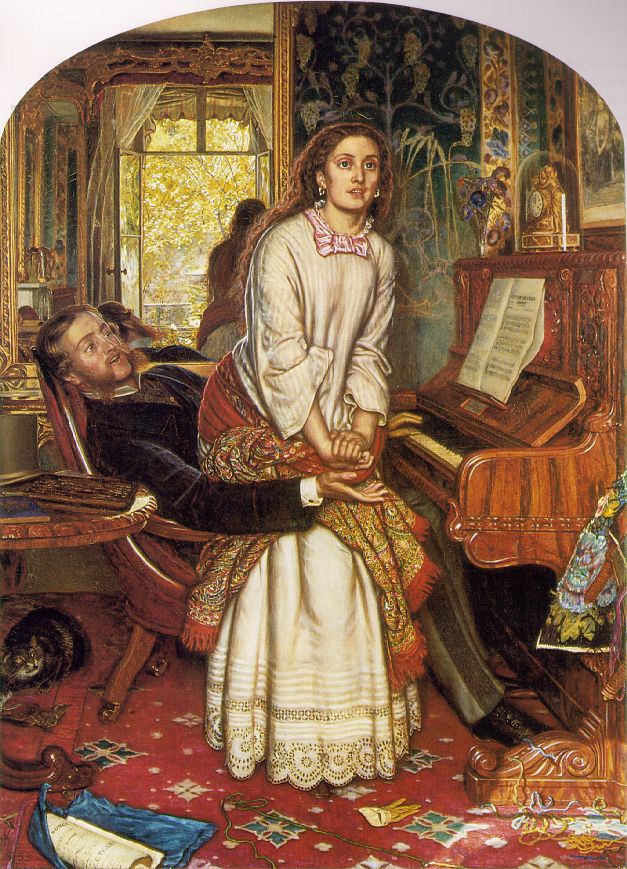


Questions morality with displaying material possessions. The woman in  the painting appears enlightened; the light in the painting resembles the judgement of God and her awakening. The cat in the painting has a metaphor of male lust and the bird: female vulnerability.

After the first world war in the early 20th century, the notion of the home being all interior faded. A phase of optimism arrived and people believed there would never be another war as devastating. The home expanded to the outside world with gardens appearing, and people were more comfortable with the outside world.

In the 1920s women had a housewife lifestyle and men had even less of a role in the home. By the 1950s, appliances were introduced that made practical tasks around the house easier. Washing machines and cookers made women's roles in the house easier, but also put added pressure on women to keep a clean house. Men were judged on how well their spouses kept their homes.

Television created a larger separation from the outside world, however, it did give people access to the world through news. This brought the issues of the outside world into the home.

By the 1980s women wanted careers, not domestic duties. Women started to gain more freedom and by the 1990s, the home was a place of relaxation for both men and women.




The Continental Renaissance 1350 - 1650

The renaissance began in Italy in the 14th century. It was a revolution in thought and creativity that broke away from the old medieval world. It was a rebirth of knowledge and ideas. The Medici family of Florence invested lots of money into the area and aided the arts. Italy was the centre of Christianity in Europe, and the religion was evolving.

Italy was also the centre of wealth, power, and politics. New ideas were developed around Italy inspired by ideas from the past.

Giotto 1266-1337


Medieval Christian influences were still included in renaissance art and design, but there were other influences too. Roman architects had an effect on the work of Italian architects designing buildings.

Giotto - Scrovegni Chapel


Artists of the era had a more humanist approach to their work, and aesthetics became more significant.

Michelangelo - Sistine Chapel


Nudity in art also became important, and art was used to teach and illustrate people.

Mathematical knowledge from the Romans led to perspective being used in paintings. A technique called foreshortening was used to manipulate the perspective in art. Michelangelo's Statue of David has a disproportionally large head and smaller feet. This is because of the statue's large scale. When viewed from below, the statue appears to be to scale.

david - Michelangelo


Raphael


Greek gods were included in some renaissance art, as well as Christian characters.

Birth of Venus - Goddess of Love


Plato argued that acknowledging physical beauty lets man understand spiritual beauty. Venus is about to be shrouded by cloth. This cloth has spring flowers which represent rebirth.

Leonardo Da Vinci wanted to gain an understanding of the human body and so dissected the dead to make observations about human anatomy to aid the accuracy of his portrait paintings.

Renaissance artists studied lots of ancient architecture.

St Peter's, Rome


Andrea Palladio was influential to 18th century architecture. He designed palaces for the rich.

Interior decoration in buildings was all about aesthetics and not really linked to intellectual meaning. Trompe L'Oeil was a technique used as an illusion in interior artwork. Paintings on walls gave the illusion that they were an expansion of the room or a window into an outside world.

Fresco in the Villa Barbaro


Paolo Veronese 1561


People thought paintings were more valuable and so didn't have many sculptures in their homes. A lot of decoration was painting with a sculptural illusion.  Furniture was still very sculptural with aspects of architectural design too.

The Italian renaissance spread to northern Europe. The breaking of Church into Protestant and Catholic created different renaissance movements in different parts of northern Europe. For instance, Protestant artists embraced thought and meaning in paintings, but not classical imagery which was considered more of a catholic visual language. Germany was the centre of the Protestant revolution and rejected classical imagery.

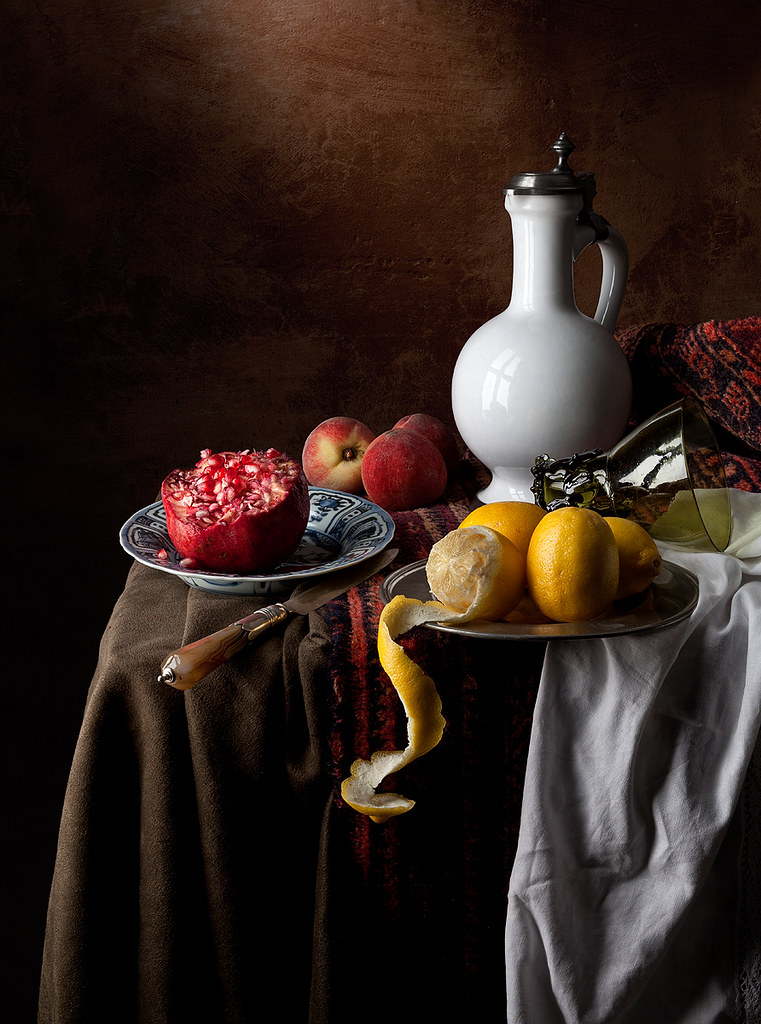
Dutch artists didn't have as many religious limitations, and created more imaginative artwork. Johannes Vermeer produced artwork with less emphasis on sexuality and wealth. However, some Dutch artists did display wealth through still life paintings; Holland was a very wealthy country and still life paintings expressed this with expensive foods and wines.


Japan and the Global View, The Meiji Period 1868-1912

Japan opened it's borders to trade in the 16th century. Dejima was a trade island in which a steady stream of materials and goods were both imported and exported. Imported arts and fashion had an effect on the Japanese culture.

Hokusai - Nihoubashi Bridge in Edo


The Japanese craftsmen benefitted from the imported materials as it allowed them to broaden their creativity and make new things. Ivory, stones, and shells were among the imported materials that Japanese craftsmen were able to access.

In 1846, Japan's isolated period started to come to an end.

Japan modernised its military in order to prevent western countries with more powerful armies from intimidating the country. The emperor declared that japan should search for knowledge from around the world.  The Meiji period was an era of enlightenment. Japan went through a fast growth of modern technologies in transportation and communication. Influences from the west had an impact on Japanese buildings and fashion.

Western designers were also influenced by Japanese design.

Charles Rennie Mackintosh


E.W. Godwin


There was a new art movement in France known as Japonisme.

Claude monet - La Japonaise 1876

Claude Monet. Madame Monet in Japanese Costume (La Japonaise).

Jekyll and Whistler - 1877 Peacock Room


Alfred W. Thompson


Van Gogh was also influenced by the works of Japanese artists.

Hokusai woodblocks


Van Gogh Japanese style


Japanese decoration became popular in America and Europe in the 1880s.

Hall, Hill House -  Charles Rennie Mackintosh


Japanese art and design was full of symbolism and meaning. Even empty space around the symbols had significant meaning in some cases.

Makuzu Kozan 1890

20140223-151544.jpg


In the 19th and early 20th century, Japan began to export porcelain and other ceramic materials to the west.

Japan also started producing a lot of metal work, such as bronze sculptures. Lots of different techniques were experimented with in Japanese crafts. One form of metal work called Shippo involved soldering metal around vases and filling sections with enamel powder.

Namikawa Yasuyuki


Monday, 16 February 2015

Visual language and Eroticism, Art Nouveau

Art Nouveau affected all art and design mediums. There were different variations of Art Nouveau in different countries. It was a visual language based on change.

In Britain, industrialisation created social and political gaps. This threatened the stability of the nation. The industrial revolution brought wealth to the country. Art Nouveau celebrated the new materials and technologies and mass production.

Arthur Mackmurdo


Sculptures were made around the idea of new technology and materials.

Alphonse Mucha


The female form was presented a lot more in painting and sculpture; the women in the artworks were also represented in a sexual manner, with nudity and often eye contact that engaged with the audience more.

Jules Cheret - Sex Sells

Advertisements started using more erotic presentations of women to sell products.

The French adopted the Rococo style, and Art Nouveau was influenced by this visual language. It evolved from Rococo.

A whiplash movement of marks and flow of lines was used in arts. This style was a metaphor for society changing and on the move.

Agathon Leonard


The references to wings and flight resembled the change that came with art Nouveau.

In the 19th century, the west became obsessed with Japanese art styles.

Kitagawa Utamaro


Tolouse Lautrec


36 views of the eifel tower - Henri Riviere
36 views of mount fuji - Hokusai

Photobucket

Photobucket


Europeans bought Japanese prints based on the everyday life. Also tales of mythology and heroes. In Japan, love and sex were a common part of lifestyle and many Japanese erotic prints were created which became part of the european underground pornography scene.

Hokusai


Flowers were used in Japanese symbolism as a reference to one's sexual lifestyle. A flower with open buds was seen as a metaphor for a promiscuous person, and closed buds represented virginity.

Paul Berthou - Folies Bergeres


Armchair - Rupert Carabin


Cats had a symbolism of sexual references.

In British textiles, curvy lines were used as a form of erotic language.

Archibald Knox


Visual Language and Decadence, Art Deco

The Art Nouveau period ended with the first world war. There was an air of optimism, and people thought that death and destruction on a scale that large would never happen again. Art Deco began, it affected most visual arts including fine art, fashion, architecture and more. It was a visual language based on quick consumption and industrial and technological celebration.

There were many motifs in Art Deco; it incorporated expensive materials and aimed to express modernism. The visual language had various different forms and influences. There were concepts of mortality and living in the here and now.

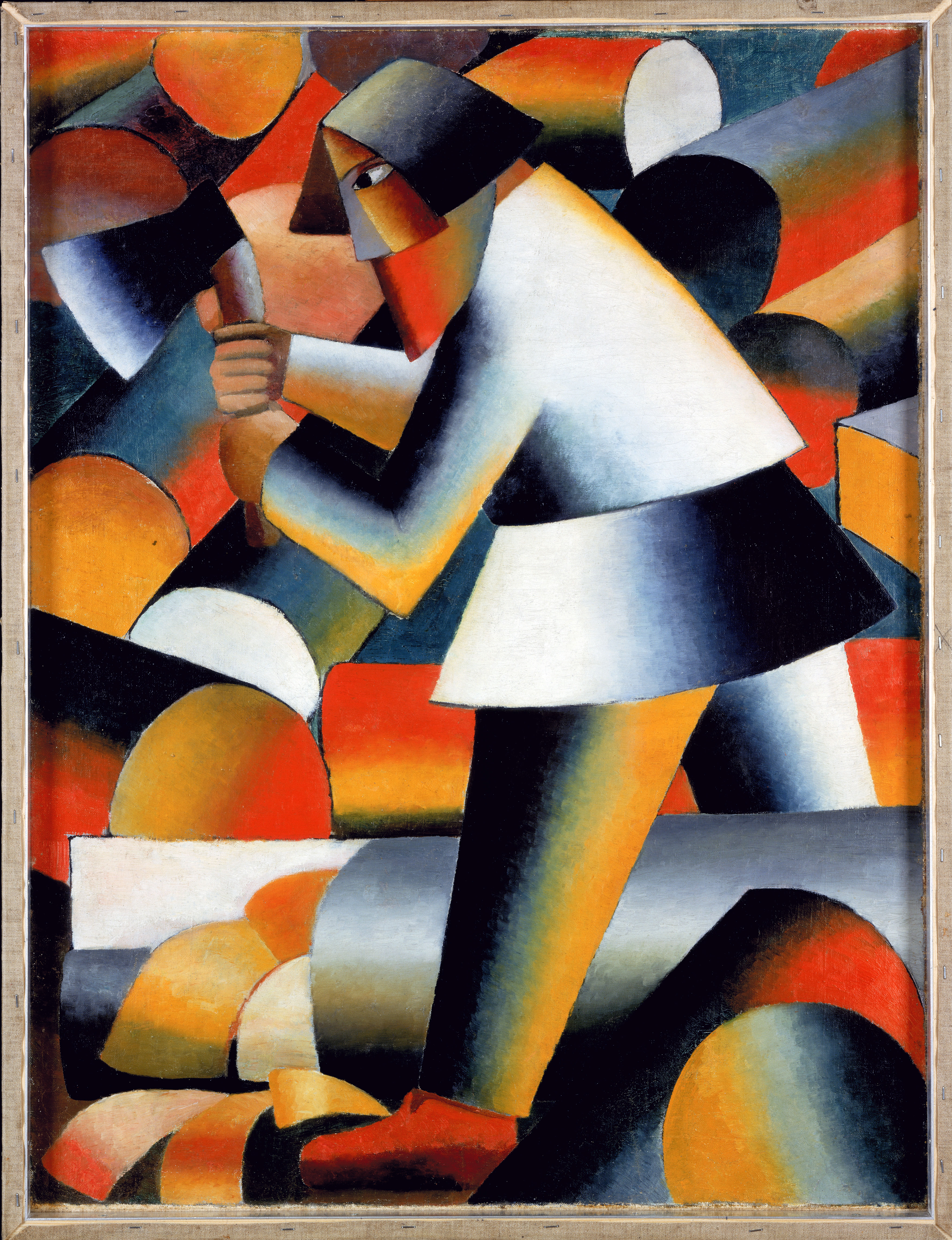
Picasso's cubism work reflected the art style. Cubism was a new form of realism which presented subjects from more than one perspective.


3 Musicians - Picasso

Fernard Leger


Kazimir Malevich


Archaeology had an impact on the new art language; Aztec and Mayan civilizations influenced architecture and design.

Jan Eisenloeffel


Uxmal

Uxmal Pyramid of the Magician.jpg

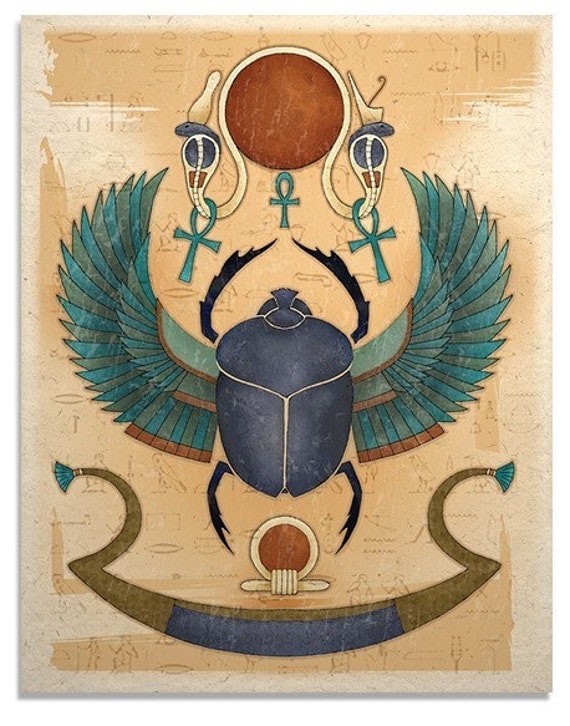
Egypto-mania was an obsession with ancient Egyptian design and culture.

Tutankhamun Temple 1922


Cartier


Art Deco architecture was very modern and new.

Art Deco Flats - Paris


Hoover Building - London


Other aspects of design were more modern too. The motor car began to be mass produced.

Hupmobile Coupe


There were notions of speed and immediacy in the design of the cars. The body shape was streamlined and some cars had stripes painted on them to imply rapid movement.

Raymond Loewry


The most expressive Art Deco experiments were in architecture. Skyscrapers stared to appear, and their tremendous size and design was an expression of success and achievement.

Empire State Building


Chrysler Building


Miami Florida, Art Deco Quarters


Art and design took inspiration from architecture and also surrealist artists. Fashion changed and became more about practicality.

The flapper fashion


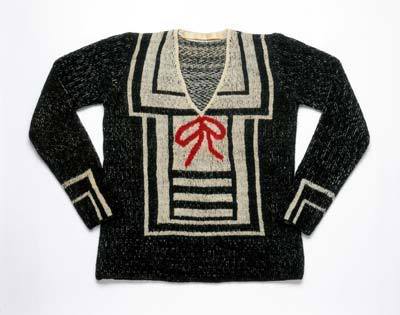
Elsa Schiparelli - Trompe L'Oeil 
Clothes patterns


Salvador Dali - Lobster Telephone


Fashion stopped before the height of the second world war, when France declared war on Germany.